Connect the cables in the wrong order and you risk sparks near the battery, a blown fuse, or damage to one car’s electrical system. Here is the correct order, and why it matters.
Key Takeaways
- Connect positive to positive first, negative to a metal ground on the dead car last, never the dead battery’s negative terminal.
- Let the working car run for a few minutes before trying to start the dead one.
- Done in the wrong order or on a swollen or leaking battery, a jump start can cause sparks, a blown fuse, or damage to either car’s electronics.
- If you would rather not do it yourself, or the battery looks damaged, call for a trained operator instead.
Preparation and safety
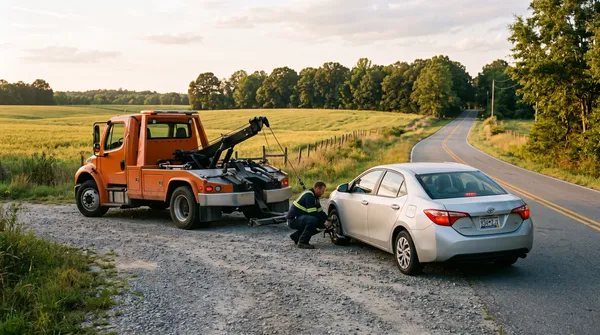
Before connecting anything, park the working vehicle close enough that the cables reach without either car touching the other, then shut off both engines. Check the dead battery for obvious damage: cracks, swelling, or a rotten-egg smell mean it may be leaking, and you should not attempt a jump. Call for a tow instead. If the battery looks normal, put both cars in park with the parking brake on, and locate the positive (+) and negative (-) terminals on each battery.
Connecting and starting
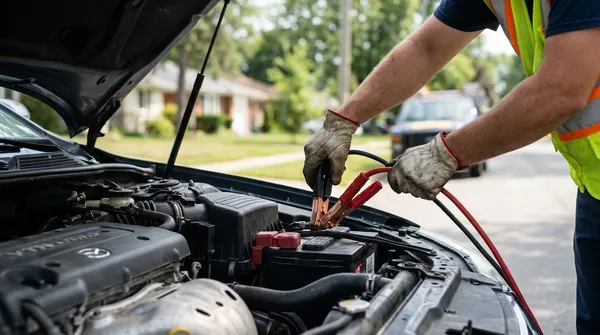
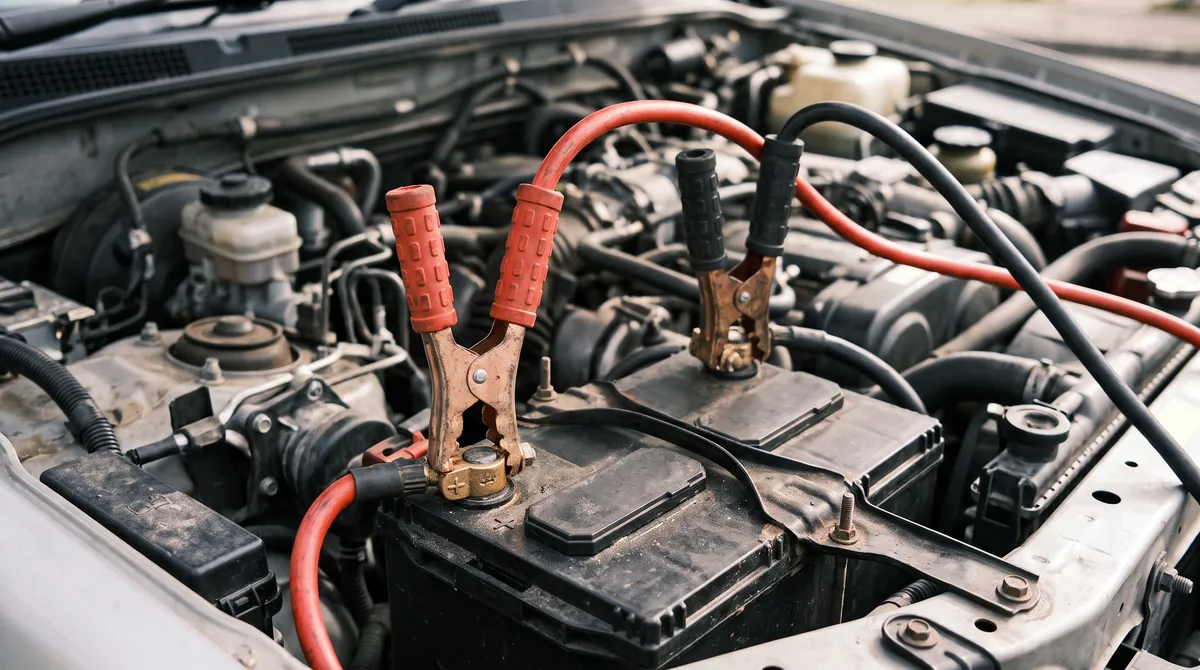
Connect the cables in this exact order:
- Red clamp to the dead battery’s positive (+) terminal.
- Red clamp to the working battery’s positive (+) terminal.
- Black clamp to the working battery’s negative (-) terminal.
- Black clamp to an unpainted metal surface on the dead car, like a bolt or bracket, away from the battery. Do not connect it to the dead battery’s negative terminal.
That last step is the one people get wrong. Connecting the final clamp directly to the dead battery’s negative terminal risks a spark right next to a battery that may be venting hydrogen gas. Grounding it elsewhere on the frame moves that spark away from the battery.
Start the working car and let it run for a few minutes before trying to start the dead one. Then start the dead car. If it starts, let both cars run for a few minutes before disconnecting the cables in the reverse order you connected them.
Will a jump start damage my car or the other car?
Done in the correct order, on a battery that is not visibly damaged, a jump start is safe for both vehicles. The risk comes from connecting cables out of order, connecting the final clamp to the dead battery instead of a ground point, or jumping a battery that is already cracked or leaking. If the dead car starts but dies again shortly after, that usually points to a failing battery or alternator, not damage from the jump itself. Our guide on telling a dead battery apart from a deeper problem covers what to check next.
When to call instead of doing it yourself
Skip the jump and call for help if the battery looks cracked, swollen, or is leaking, if you do not have another vehicle or jumper cables on hand, or if you are not confident doing it yourself, especially in a hybrid or electric vehicle where the process can be different. A trained operator carries the right equipment and knows the correct order for your specific vehicle.
Need a jump start in Woodruff or the surrounding area? Call Woodruff Towing & Roadside Assistance or request a quote and we will get you back on the road.
Frequently asked questions
What happens if I connect the cables in the wrong order?
You risk a spark near the battery, which is a real hazard if the battery is venting gas, along with possible damage to either car’s electrical system. If you are not confident about the order, call a trained operator instead.
How long should the working car run before I try to start the dead one?
A few minutes is usually enough to give the dead battery a partial charge. If the dead car still will not start after that, the issue may be deeper than a simple dead battery.
Can jump starting a hybrid or electric vehicle damage it?
The process can differ from a standard gas vehicle, and getting it wrong carries more risk to sensitive electronics. If you drive a hybrid or EV and are unsure, call for a trained operator rather than guessing.
My car started but died again a few minutes later. What does that mean?
That usually means the battery will not hold a charge or the alternator is not charging it while the engine runs, not that the jump start caused new damage. See our guide on jump start vs. tow vs. repair shop for the next step.