
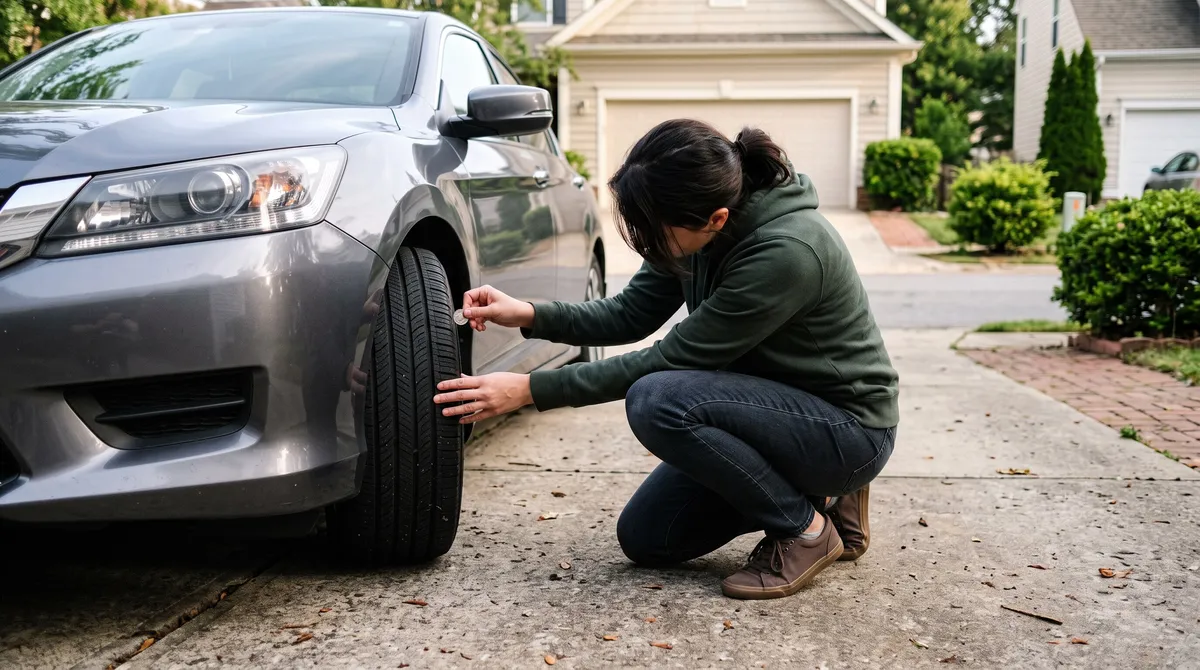
A lot of our calls start the same way, on I-85, on SC-101, somewhere out past Spartanburg or Greenville. Whatever was going to break just broke. Here’s what gets us, though. Ask around and you’ll find most of those drivers never popped the hood that morning. Never looked at a tire. Fifteen minutes beforehand and a bunch of them are still moving right now instead of standing on a shoulder waiting on us. So below is what actually matters to check, five things, roughly fifteen minutes, before you point a car anywhere that’ll take more than an hour.
Key Takeaways
- Tires, battery, fluids, lights and wipers. Fifteen minutes, give or take.
- Match your tire pressure to the sticker inside your door jamb. Don’t go off a number you half remember.
- A battery can start fine in the driveway and still quit an hour into the drive once it’s under real load.
- None of this guarantees nothing goes wrong. That’s what roadside assistance is actually for.
Tires, and why they matter more than people think
Start here, because tires cause more long-drive breakdowns than almost anything else we see, and it honestly isn’t close. Walk around the car and look at all four, the spare too if your car still carries a real one, and if the tread’s worn down near those little bars molded into the rubber, or you genuinely can’t remember the last time you looked, that’s your answer right there, get it checked before you leave town rather than after.
Pressure is the part people skip, and it’s just as important as tread, maybe more. The number that matters isn’t printed on the tire itself. It’s on a small sticker inside your driver’s door jamb, specific to your exact car, not some round figure somebody mentioned once at a shop. Check all four while they’re still cold, meaning before you’ve driven anywhere that morning, because a tire that’s been rolling for twenty minutes reads higher than it is at rest. That’s just how air behaves once it warms up, and a warm reading will tell you a lie.
The stuff under the hood
Pop it open and there are really two things worth your attention, the battery and the fluids, though the battery deserves most of the time. Age, corrosion on the terminals, and whether the engine cranks a little slower than it used to when you turn the key, those three things together tell you most of what you need to know. Past three or four years old, or with any white or greenish crust building up around the terminals, a battery is a real risk heading into a long haul, especially after weather that’s run unusually hot or unusually cold lately. That slow crank, interestingly, is the exact same early warning sign we get into in our guide on telling a simple dead battery apart from something worse, just caught a day earlier instead of on the shoulder of I-85.
The fluids take less time. Pull the dipstick, check the oil’s level and color (dark and gritty, or sitting near that bottom line, means it’s due), glance at the coolant through the overflow tank rather than cracking a radiator cap on a warm engine, and top off the washer fluid while you’re already in there. A couple of minutes, honestly. Low coolant alone is a surprisingly common reason cars overheat and strand someone on a hot Upstate afternoon, so don’t skip it just because it’s quick.
Lights and wipers take even less. Cycle the headlights, brakes, and turn signals, have somebody watch from outside if you want to actually catch a dead bulb before a trooper does at night, and take one real look at the windshield for any crack that’s started spreading, since a chip that looks harmless sitting still in a parking lot can turn into a full crack after a few hours of highway vibration and temperature swings.
What still breaks down anyway
We’re not going to dress this part up. All of the above catches most of what causes a roadside call. Not all of it, though. Alternators quit with zero warning sometimes. Belts just snap, no buildup, no hint. You can pick up a nail five minutes after checking a perfectly healthy tire. None of that makes the check pointless. It just means a long drive keeps a little slice of risk that no driveway inspection ever reaches.
Which is what roadside assistance is actually for. Something goes sideways on I-85 near Woodruff, or anywhere else out here, and more often than not a quick fix on the shoulder gets you rolling again, no full tow required.
This check matters even more during a busy travel week. See what changes on the road around the holidays and why a little extra time matters when traffic is heavier than usual.
Why local knowledge matters
A call center somewhere out of state has no idea that one specific stretch of SC-101 barely has a shoulder worth pulling onto. They don’t know that a cross street name alone means nothing out here, you need the nearest landmark too, or dispatch is just guessing. Drivers who actually know these roads get to you faster, and they catch what you’re describing quicker than the words alone would suggest to a stranger. That difference matters a lot more than it sounds like when you’re the one standing on the shoulder trying to explain exactly where you are.
A careful check still won’t catch everything, though. If something goes wrong anyway, call us or request a quote online. We’re here, we’re fast, and nobody’s left guessing what it’s going to cost.
Frequently asked questions
How often should I check my tire pressure?
Once a month minimum, plus every single time before a long drive. Do it cold, meaning before the car’s moved yet that day. Go by the sticker inside your driver’s door jamb, never the number stamped on the tire’s own sidewall, since that’s the tire’s maximum rating, not what your specific car actually needs day to day.
Can a weak battery pass a quick test and still die on the road later?
Yes. It happens more than most people assume. A battery can crank the engine over just fine sitting in your driveway and still fail once it’s under the sustained load of a real drive, especially near the tail end of that typical three to five year lifespan. Age and visible corrosion on the terminals tend to tell a more honest story than whether the thing happens to start on any given morning.
Is a pre-trip check the same thing as a full inspection?
Not really, no. This is a short look, maybe fifteen minutes, at the handful of things most likely to leave you stuck on a long drive specifically. It doesn’t replace regular maintenance, and it’s definitely not a mechanic’s full inspection. If your car’s overdue for an oil change, or something’s been bugging you about it for weeks, this quick check won’t fix that. It’ll just tell you whether today is safe enough to get in and go.